Growing Microsoft Fabric with ISVs
Spearheaded an ISV design partner program and standardized UX toolkits, reducing partner launch times by 67% and supporting $2.8B+ in strategic platform partnerships.
View the announcement →
My role
Design program lead
Timeline
2024 - Now
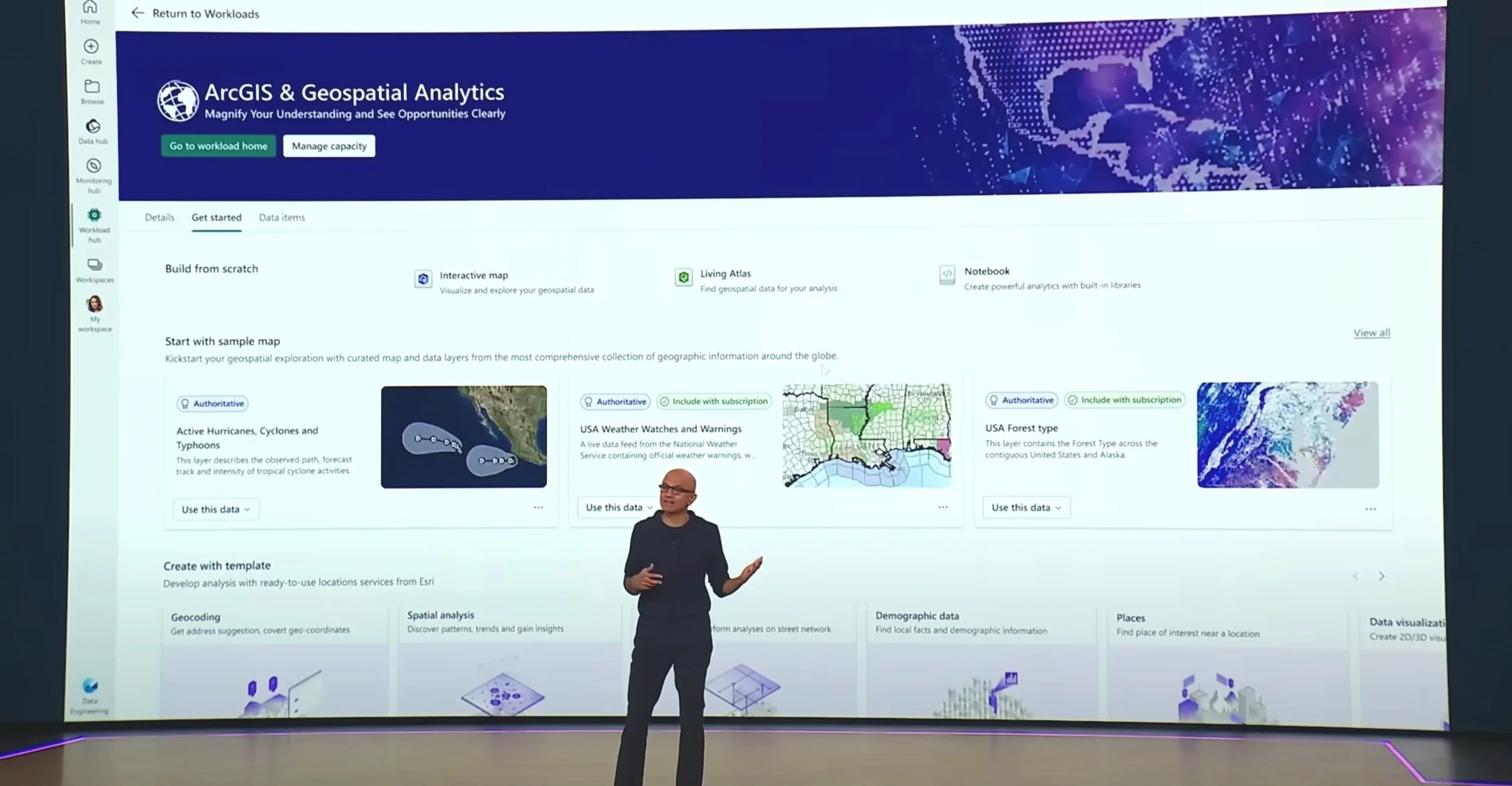
Bringing the Fabric extensibility vision to life on the global stage—featured during the Microsoft Build keynote.
How it started
Growing Fabric into a vibrant, open ecosystem
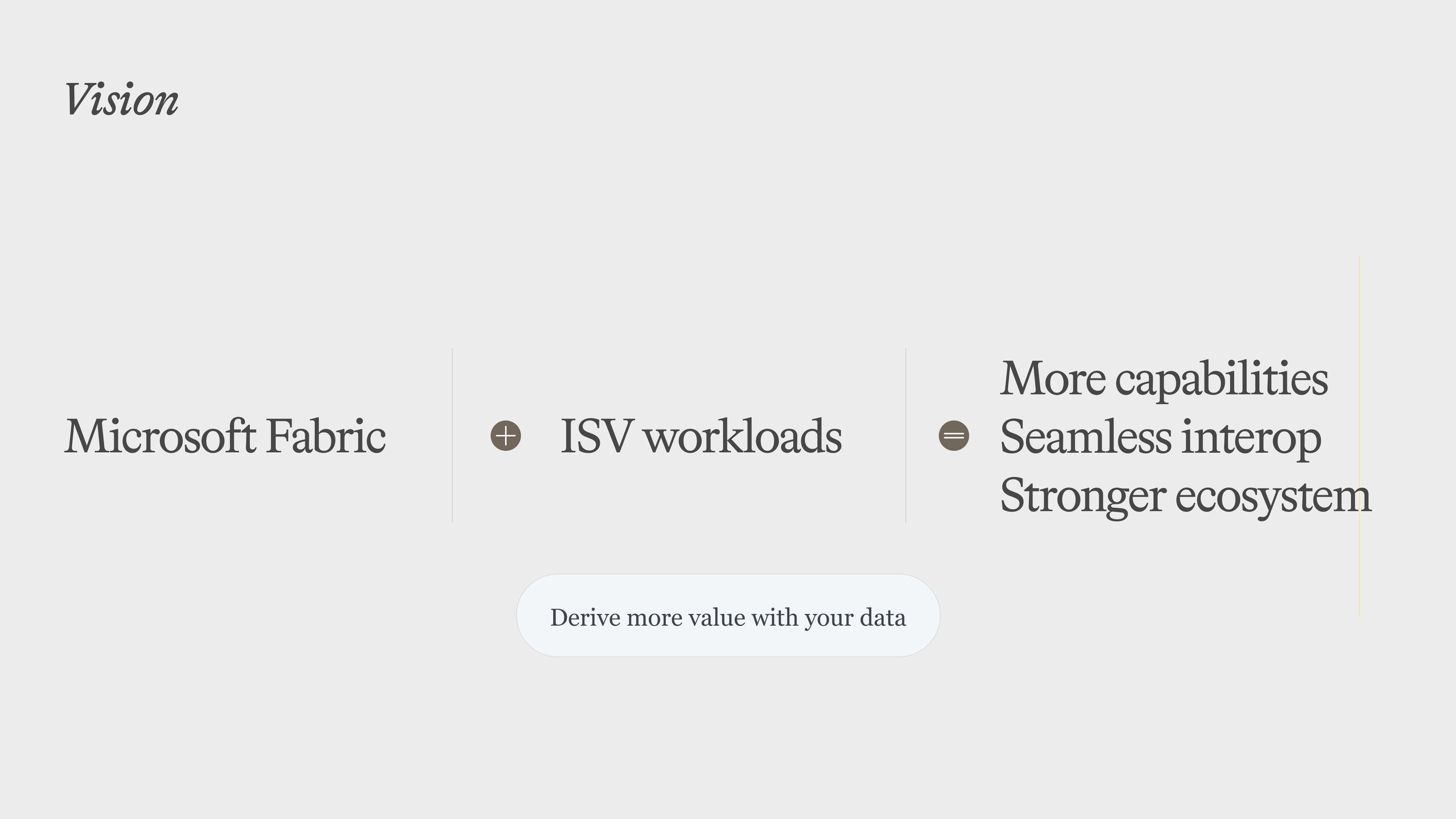
When Microsoft Fabric became generally available in 2024 as the unified SaaS data platform for building end-to-end data solutions, it also extended the platform for Independent Software Vendors (ISVs). The objective was to grow Fabric into a rich ecosystem with a simple premise: Fabric + ISV partners = expanded capabilities. As a result, customers can derive significantly more value from their data estate with Fabric.
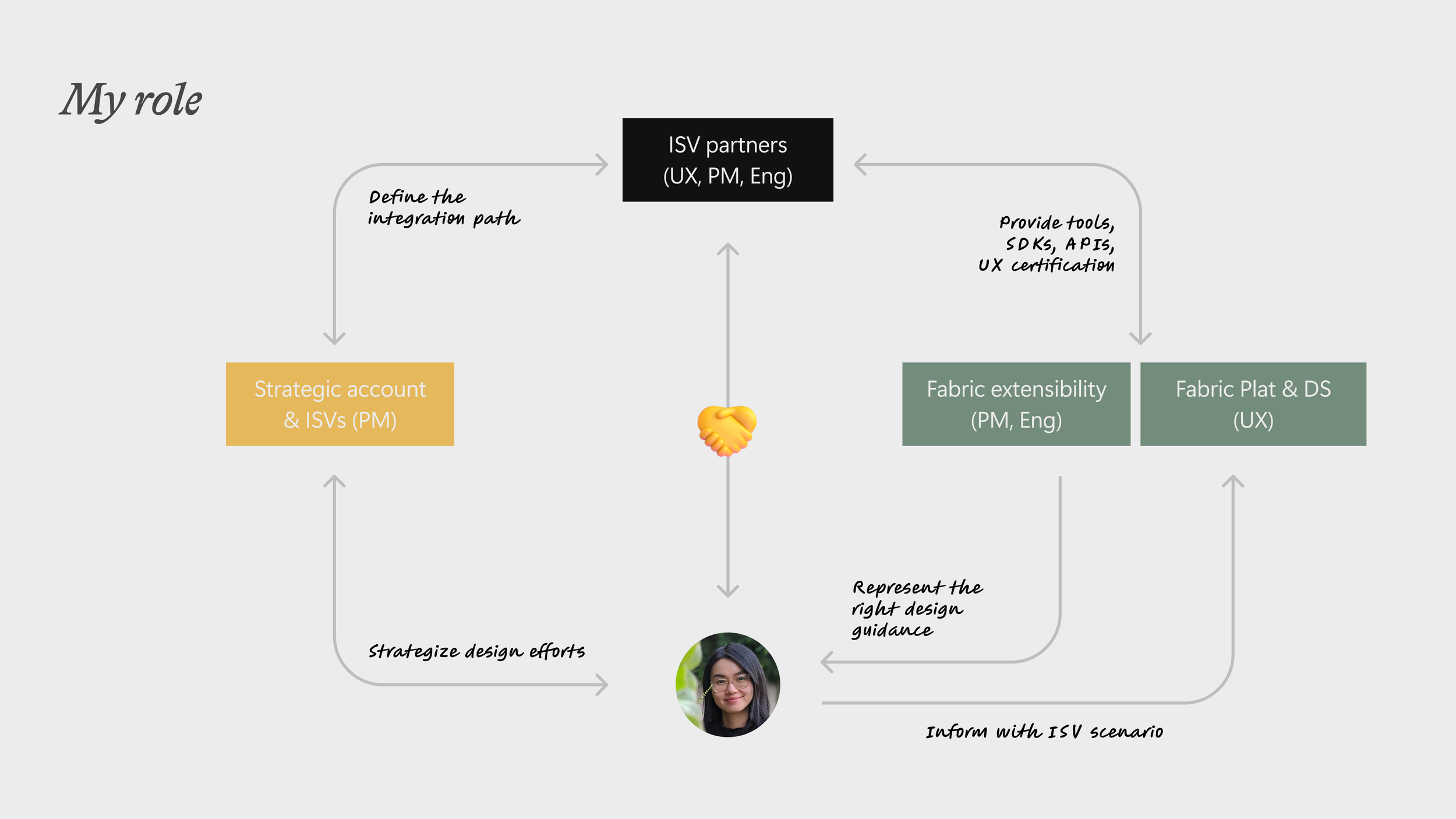
To achieve this vision, the ISV design program brought together a cross-disciplinary team to ensure experience cohesion across the platform, co-designing integrations with external partners so that every third-party workload felt like a natural, unified part of the Fabric ecosystem.
Building the plane while flying it
The challenges: From ambiguous ask to systemic scale: When the program launched, it was a blank slate. The initial ask was simply to step in as a design expert to "connect the dots" and act as a bridge between internal Microsoft teams and external ISVs.
However, as I began working directly with partners, deeper systemic hurdles quickly surfaced. I needed to shift the focus from ad-hoc support to solving three core challenges:
Navigating Ambiguity: How might we define a shared vision of success across disparate external partners and internal stakeholders without any existing integration documentation?
Standardizing the Wild West: How might we create cohesive UX guidelines and certification requirements for third-party extensions while the core Fabric platform itself is still maturing?
Scaling the Impact: How might we transition from 1-on-1 consulting model into a scalable, 1-to-many ecosystem that empowers partners to build independently?
How I approach it
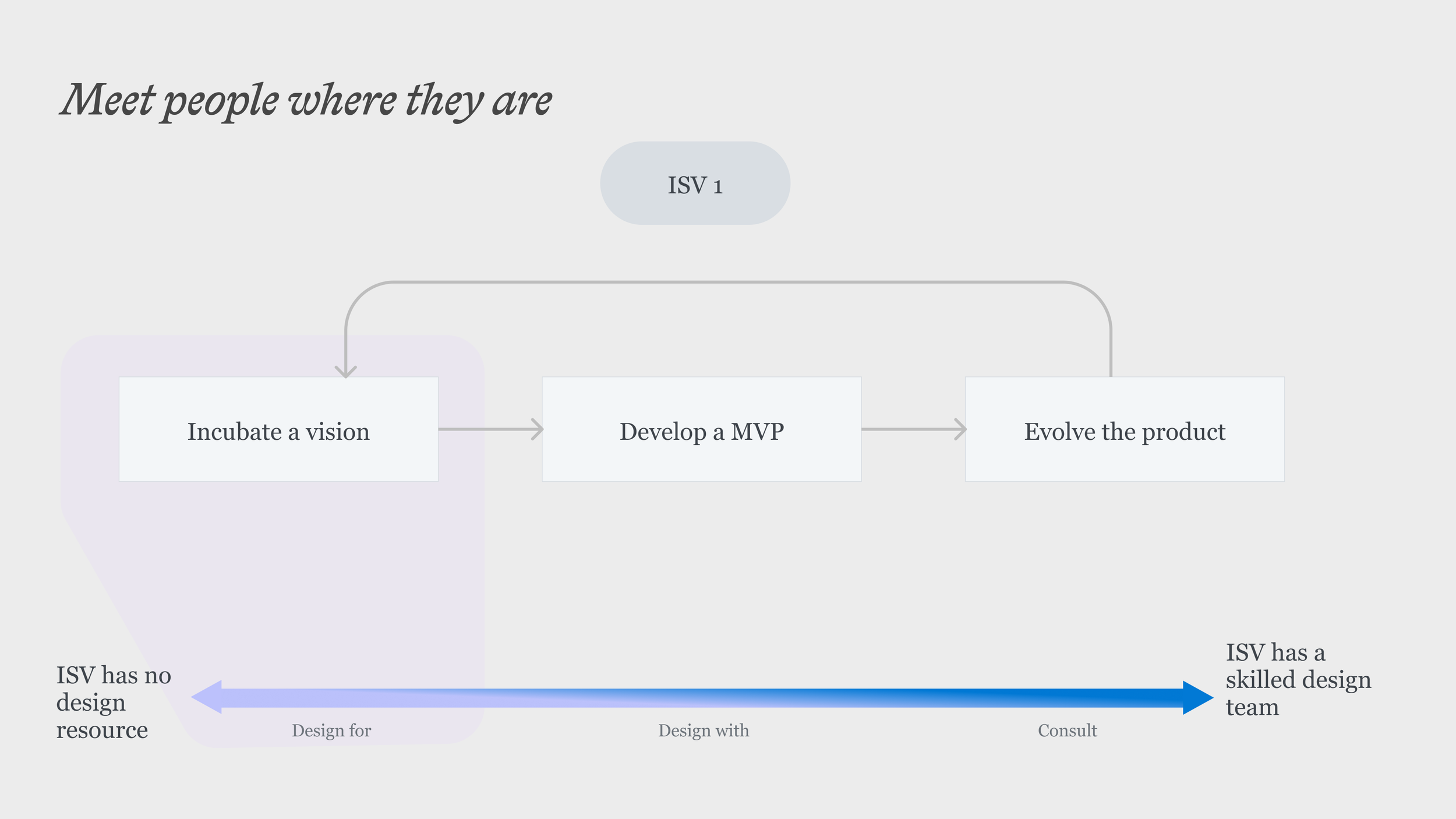
Meeting people where they are: Depending on the ISV's design maturity, my role shifted constantly. Sometimes I was designing for them, sometimes with them, and other times I acted as a consultant to guide them through the complex Fabric system.
Scaling the system: Partnering with the internal design system team, I authored a set of toolkits, best practices and playbooks that enable ISVs to onboard quickly. As I uncovered common partner workflows and pain-points, I standardized them, resulting in 4 new interaction patterns directly into the core Fabric design system.
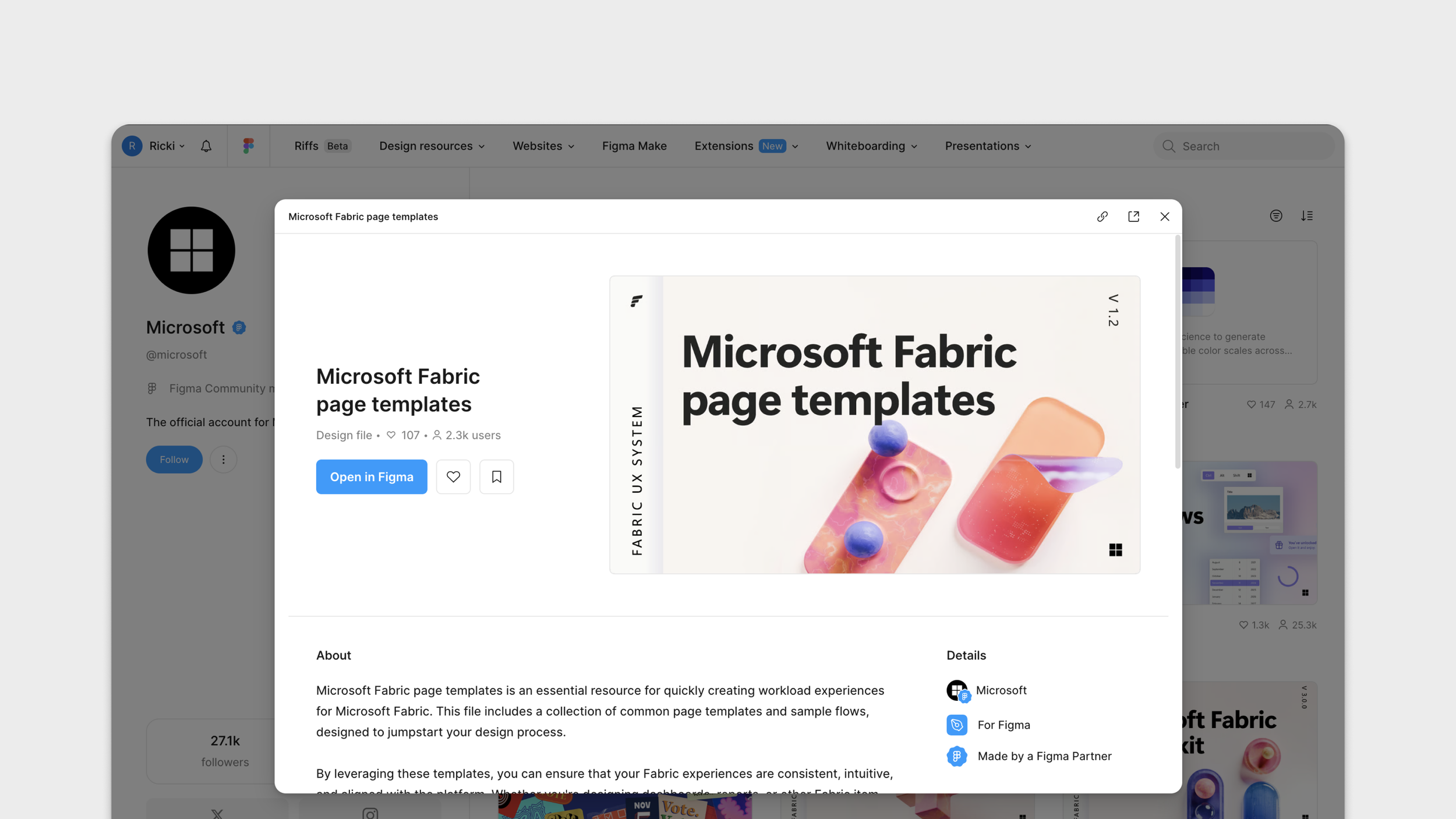
Advocating for the platform: Besides evolving the design system and interaction pattern, I also played the role of PM where I took insights learned from deep ISV engagements, authored product requirements that filed directly with platform team, ensuring real-world partner feedback actively shaped Fabric’s core product roadmap.
The outcome
3x Faster Time-to-Market: Accelerated ISV product launches from 12 months down to 4 months across 25+ strategic partners by standardizing complex workflows.
$2.8B+ Strategic Executive Impact: Authored high-fidelity narrative visions and executive demos that supported C-suite commercial negotiations and were featured in the Microsoft Build keynote with tier-1 partners (Esri, LSEG, Neo4j).
2,000+ Community Adoption: Scaled design enablement from 1-on-1 coaching to a 1-to-many ecosystem by publishing the official Fabric Extensibility Figma Toolkit.
3x
faster time-to-market
$2.8B+
partnership
2000+
toolkit users